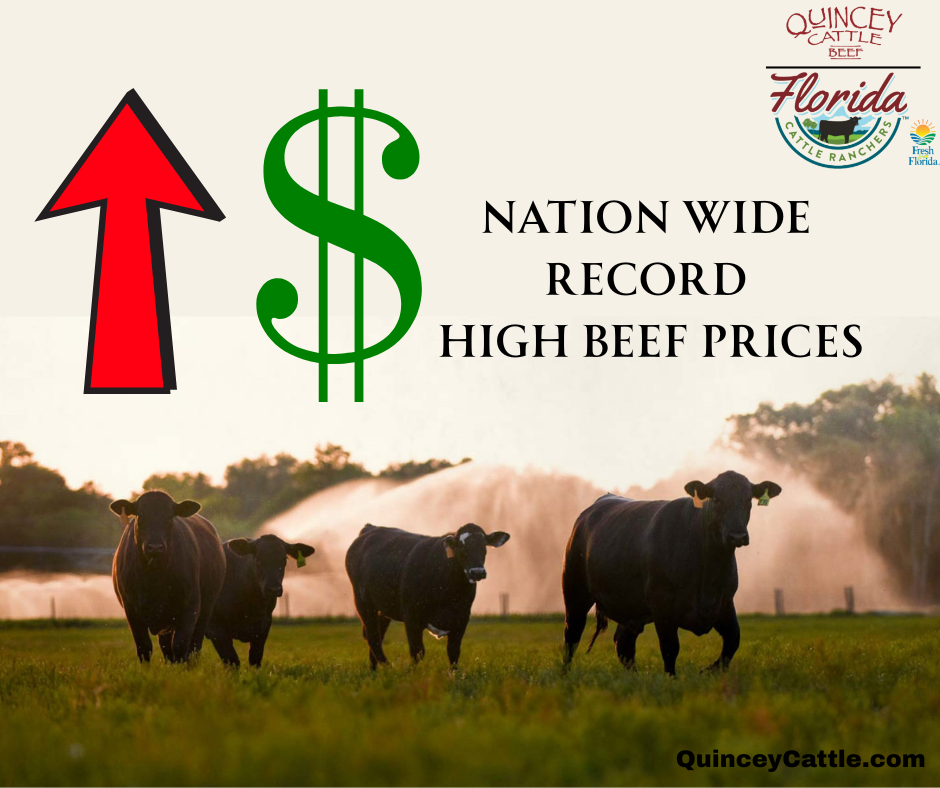
Ever wonder why beef prices are so high? It’s a perfect storm of supply issues impacting the cattle industry, which trickles down to your grocery bill.
Here are three major factors driving record high beef prices across the
country:
Low Calf Crop :
Years of extreme drought have reduced grazing pastures and increased feed costs. This has forced ranchers to send more cows and calves to market instead of keeping them for breeding. Fewer calves being born means fewer cattle for the beef supply down the road, creating a massive supply shortage.
Low Heifer Retention :
Typically, ranchers hold back young female cows (heifers) to become the next generation of breeding stock, which is essential for herd growth. However, with record-high prices for cattle and the need to cover rising costs or debt, many producers are selling these heifers instead of keeping them for breeding. This decision for short-term profit stunts future herd expansion, locking in a tight beef supply for years to come.
Screwworm at the US-Mexico Border :
The detection of New World screwworm in Mexico—a flesh-eating parasite that can be devastating to livestock—has led to the closure of the US-Mexico border to live cattle imports. Mexican feeder cattle are a significant part of the US supply chain, and this halt immediately reduces the number of cattle available for feeding and processing in the US, contributing to the tight supply and higher prices.
The bottom line?
line? It takes years to rebuild the national cattle herd, so this shortage will likely keep prices high for the foreseeable future. Understanding the biological and economic pressures on our ranchers helps explain why beef is hitting all-time highs at the store.
What does this mean for Florida cattle producers like us?
It means that we are in a love/hate relationship with this current trend. On one side, Florida ranches are mostly cow/calf operations, which means they exclusively produce calves to be sold and fed out in other states. This side of the operation is flourishing and receiving a much-needed boost after years of high operational costs and market uncertainty. We are different in the way that we feed our cattle and keep them right here in the Sunshine State, which helps to lower our carbon footprint.
Prices are high for live cattle because of low calf-crop, low heifer retention, and a screwworm crisis at the border and these factors affect your wallet when it comes time to buy. Every day we are working to provide a great variety of high- quality beef options to you and your family, so hang tight with us through these unprecedented times, and as always, thank you for supporting local agriculture.